
.png)
Despite the fact that the European People's Party (EPP) and conservatives in the European Parliament have weakened the Affordable Housing Report and made it a wish list of property speculators and builders, the fight for affordable housing is not over.
Zagreb, 20 March 2026 Despite the fact that the European People's Party (EPP) and conservatives in the European Parliament have weakened the Affordable Housing Report and made it a wish list of real estate speculators and builders, the fight for affordable housing is not over, they said at a joint press conference Gordan Bosanac from the client We can! and Marko Vešligaj from SDP Members of the European Parliament.
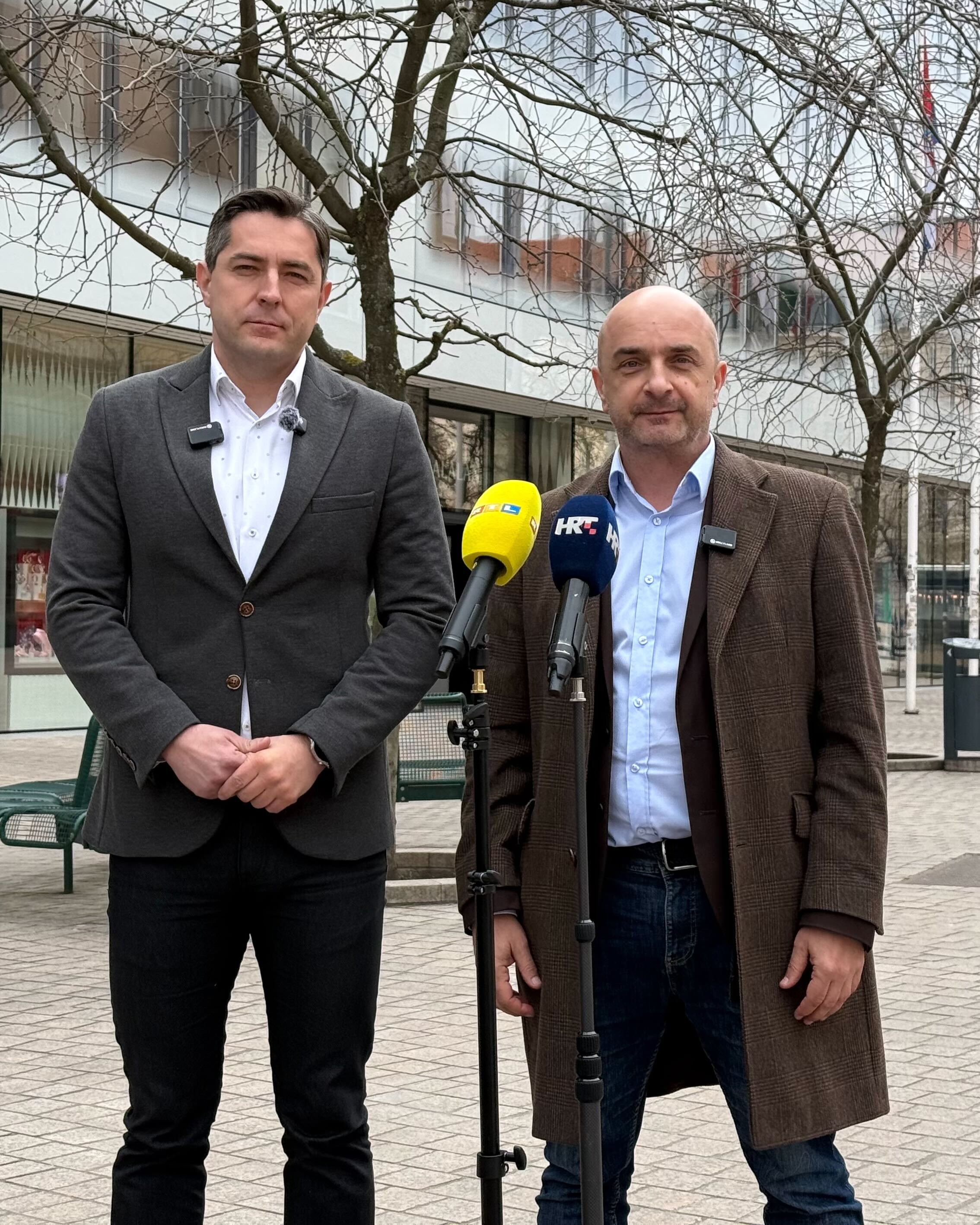
Such an outcome of the vote, they pointed out, did not close the debate on affordable housing, but further demonstrated how important the next stage of the European legislative process will be. On March 6, the European Commission opened public consultation on the future Affordable Housing Act, calling on citizens, public authorities and other stakeholders to submit proposals to strengthen housing affordability, particularly in areas under the greatest housing pressure. In doing so, the Commission also raises questions about the impact of short-term rentals, the identification of areas of housing stress and possible legislative solutions, making it clear that the crucial political battle over the direction of European housing policy is still ongoing.
”Unfortunately, the EPP rapporteur, primarily backed by the radical right, has imposed on the report the interests of the private construction sector and investors, not the people. This is best seen by the fact that the report does not recognize housing as a human right. The European People's Party has once again put profits ahead of the people“, said the Bosnian.
The Witch League warned about the same problem, pointing out that one of the fundamental starting points of any serious housing policy was omitted from the final text. ”Despite our amendments and advocacy, it did not go into the report that the right to housing is a fundamental human right. This is a major problem for the future development and implementation of housing policies because it weakens the possibility of public action in this area. The European People's Party opposed such a definition, while at the same time the report repeatedly mentions the right to private property, which clearly shows the problematic political direction of the document”, he warned.
Bosanac stressed that the report misidefines the causes of the housing crisis. Instead of recognising the financialisation of housing, speculative investment and the growing pressure of investment buying, it sees the housing shortage as the main problem, and in response offers primarily new construction and facilitation of permitting. Such an approach, he stresses, does not answer the key question — to whom these apartments will be available. He recalled that in Croatia, according to official data, there are almost 600 thousand empty housing units, which clearly shows that the problem is not only in quantity, but in the fact that housing is increasingly treated as a commodity and a means of investment.
The witch league pointed out that the biggest problem is the shortage of public housing and the absence of an active role for the state. ”States do not build, manage or plan for the long term, but subsidize private investors. It's an escape from responsibility. It is the State that must guarantee the roof over its head, this cannot be left exclusively to private capital” he said.
Both also warned about the lack of serious transparency mechanisms in the real estate market. Bosanac pointed out that the report does not recognize the need for stronger control of money laundering when investing in housing, which is especially important for Croatia. Vešligaj added that as many as 70 percent of properties in Croatia are bought with cash, while at the same time it is not known where this money comes from. He also warned that the transparency register that he proposed while working on the report was not included in the document.
Speaking about the short-term rental, the Bosnian assessed that the document again does not follow the reality that citizens face. ”The document states that additional evidence is needed for the impact of short-term rentals on prices. The citizens of Split and Zadar, cities that are at the very top in the European Union in terms of the number of short-term rental apartments, do not need additional evidence to know why rental prices have skyrocketed” he said.
The Witch League also warned that the report did not accept the UN's 30 percent rule, under which no household should spend more than 30 percent of their disposable monthly income on housing costs. It also assessed that certain solutions that represent administrative burdens, particularly in the area of permits, could open up space for abuse and undermine compliance with spatial plans.
The Bosnian also recalled the scale of the housing crisis in Croatia: the average salary is about 1,500 euros, while the average price per square meter of apartment in major Croatian cities is about 3,000 euros. ”This means that a man has to work for two months for one square of the apartment. This clearly shows how far housing is today from the real possibilities of most citizens”, he warned.
As necessary directions of action, Bosanac cited activating vacant apartments through tax, legislative and enforcement measures, financing the construction of public housing with controlled rents, investing in cooperatives and cooperative housing, and limiting the spread of short-term rentals where housing pressure is greatest. The Witch League added that the report does not foresee additional European funding, but shifts the burden of solving the housing crisis to member states.
In conclusion, they said that the adopted report did not close the debate, but only opened a new political struggle, especially in the context of future European legislative proposals, saying that housing must finally be treated as a human right and public interest, and not as a space for further growth in the profits of investors and property speculators.







.png)
.png)