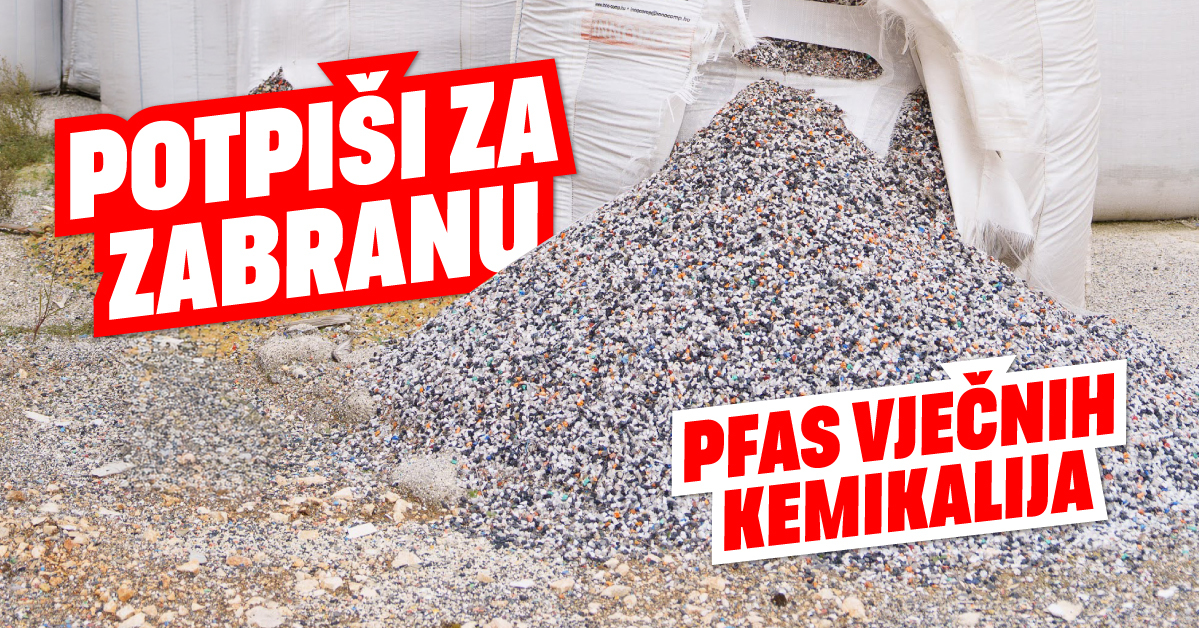
Sign the petition to ban PFAS "forever chemicals"
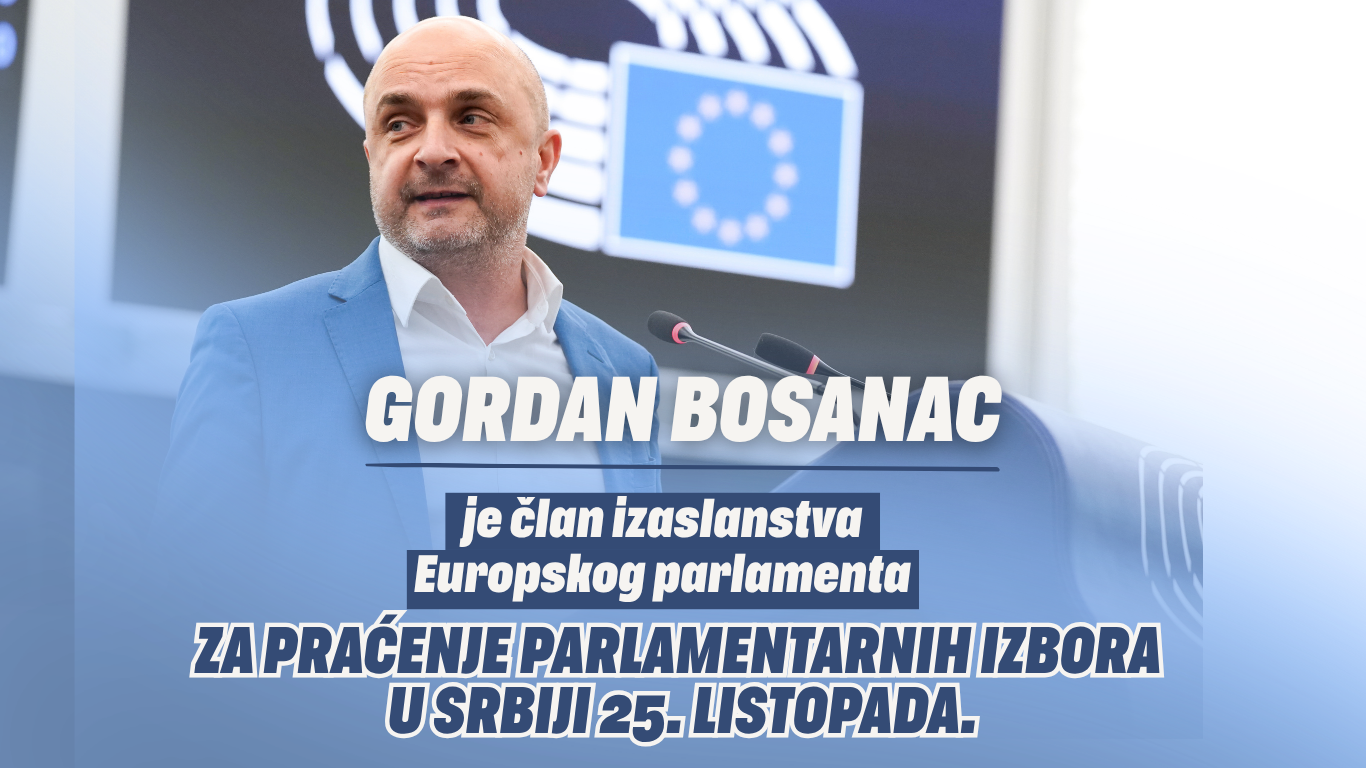
Member of the European Parliament Gordan Bosanac from the Možemo! party called on citizens today to sign the online petition to ban "forever chemicals," or PFAS compounds, in the European Union. This petition was launched in collaboration with 14 colleagues from the Greens/EFA group in the European Parliament.
You can find the link to sign the petition here: https://act.greens-efa.eu/hr/pfas/#take-action
The petition demands that the European Commission ban PFAS compounds in all new products manufactured in the EU as soon as possible, mandate that companies producing PFAS cover the costs of environmental remediation, and introduce stricter testing standards for surface and drinking water.
Bosanac explains that support for the petition is crucial following the illegal hazardous waste dumping case in Gospić. Testing of local residents conducted by the Greens revealed that five out of seven people tested positive for PFAS compounds.
"I invite citizens to raise their voices together and join the initiative to ban PFAS with their signatures. These signatures will be a great help to us in our ongoing advocacy efforts," said Bosanac.
Explaining the reasons for launching the initiative, Bosanac clarified that pressure on the European Commission is necessary to enact stricter restrictions, as these compounds cannot be eliminated overnight. He highlighted a significant initial advocacy success: the reaction of the European Chemicals Agency (ECHA), which, immediately following the Greens' research, officially warned the Commission for the first time that trifluoroacetic acid (TFA) is a toxic compound and requested its removal from the list of non-toxic substances.
Bosanac warned that the European Commission has already delayed deadlines for redefining the list of toxic compounds and that now is a critical moment for strong public mobilization. The petition, translated into a dozen languages, is available via the social media channels of the Možemo! party and the MEP.
The fact that regulation yields direct results is confirmed by hard data from the research: the unregulated compound TFA was found in the bodies of 100 percent of the citizens tested, while the other four compounds, whose use is legally regulated, were detected in only 25 percent of the sample.
"This proves it beyond a doubt: when a compound is legally regulated, its presence in the human body drops drastically. That is why we must create new momentum so that the Commission, in addition to TFA, strictly restricts other dangerous compounds as well,"noted Bosanac, reminding that the case of illegal waste dumping in Gospić will be discussed on November 5th at the European Parliament's Committee on Petitions (PETI).
In the second part of the conference, Bosanac addressed the negotiations on the EU's Multiannual Financial Framework, expressing sharp disappointment with the Irish presidency's proposal, which envisions a drastic budget cut of 356 billion euros. The Irish proposal reduces the budget to just 1.02 percent of the European Union's GDP, which is significantly below the current budget of 1.14 percent of GDP. In contrast, the European Commission proposed a 2 trillion euro framework, while the European Parliament is seeking a 10 percent increase—between 1.26 and 1.27 percent of European GDP—to enable the Union to cope with geopolitical challenges.
Bosanac also warned of a foreign policy threat: Marine Le Pen's announcement that she would halve the French contribution to the European budget makes it necessary to conclude negotiations before the elections in France, by April or May at the latest. This would leave member states six months to prepare a new instrument, a so-called "mega-fund," so that the withdrawal of funds could begin on January 1, 2028.
The Možemo! MEP emphasized that the Parliament is firmly conditioning the adoption of national plans on mandatory consultations with cities and municipalities: "We will put an end to the practice where the Prime Minister and ministers write plans by themselves and use European money to finance projects like private hotels on the islands."
Commenting on Prime Minister Andrej Plenković's statement that he is relatively satisfied with the Irish proposal, Bosanac concluded: "We can only be satisfied that funds for cohesion and agriculture were not cut, but the overall budget is significantly smaller. This automatically means less money for Croatia. Our primary interest is a larger European budget because it guarantees greater development momentum for our country."
You can find the link to the Instagram post here: https://www.instagram.com/reels/DejWKrWsQUX/